Table of Content
If you’re looking for more inspiration, you can also head to our OPI YouTube channel, or visit us online at If you can’t ship these, maybe some of you will have an opportunity to drop them off at your clients’ door, ensuring you practice social distancing. Have questions or want to show off your expertise?

If you’re using cotton pads, apply acetone directly onto the pad so it’s, again, damp but not dripping wet. Next up, fill a nail soaking tray with acetone, then soak your nails for five to 10 minutes. This should be enough to break down the gel polish.
Soaking method
Also, make sure to clean them after a while to keep them safe for use. It's a tool you can't miss if you want to start your journey to do home gel nails. Doing gel nails at home isn’t so different from the nail salons. So long as you have the right equipment and have the patience to learn, you’re going to find this to be rather enjoyable to do. While it might seem like a safe alternative to using acetone, it can actually cause more damage in the long term. Repeatedly peeling off manicures can cause onycholysis, a common nail condition caused by the nail lifting away from the nail bed.
One by one, place an acetone-soaked cotton ball on top of your nail. Grab a small piece of foil and wrap it around your fingertip to secure the cotton ball to your nail. Gently press the foil, so it forms to your fingertip. No matter how careful you are, filing off your gel nails will cause some damage to your natural nails, so don’t skip the buffing and conditioning. Pour some pure acetone (about 1/4 cup) into the bag. If you don’t have pure acetone the next best thing is a regular acetone-based nail polish remover.
How to Remove Gel Polish With Soap, Oil & Water
Simply keep them still under the water for minutes. The quickest and easiest way is to use a nail drill. If you don’t have one, then using a hand file is the next best thing. But be careful not to file down the polygel too much before you soak them in acetone. Basically, a nail drill / e-file speeds up the removal process.
Buff off any remaining gel residue with a nail file. Even after you have pushed off the gel nail, there may be some gel left on your fingernail. Dry the nail and use a nail file to buff it off with gentle back and forth movements. Be sure to only buff off the gel residue and not your natural nail.Most nail files have a coarse side and a smooth side. The coarse side is best for shaping your nails. This side will look and feel a lot bumpier.
How to grow stronger & longer nails
If the nail won’t come off with water, cover it with olive oil or cuticle oil before sliding your nail under the gel nail to gently push it off. After you remove the nail, use a nail file to buff off any remaining gel residue. For an alternative method, fill a bowl with warm water, dish soap, and salt, and soak your hand for 15 to 20 minutes. When you’re done soaking, dry your hands and remove the gel nails by peeling or filing them off. If you don’t have access to acetone nail polish remover, we have an alternative solution that can work in the interim. Once you’ve reached the base coat, switch over to a buffer to smooth everything out.
To use it, first make sure you have filed and buffed your gel polish. Then pour the acetone remover into the base, switch on the steamer, then stick your fingers into the 5 finger holes. Alcohol dries naturally fast, so you don’t have to wait long for each finger nail to dry. Redo the same process for the other fingers to achieve dry and clean nails free from oils ready for base coating.
Filing Off the Nails
Once again, the polish should begin to lift away from your nails. This should make it easy for you to gently scrape the polish from your nails with a cuticle stick. After all of the polish has been removed, gently buff your nails to smooth the surface. You should avoid exposing your nails and hands to harsh substances for at least a few days after removing your gel nails. Switch to the fine side of the file when you see your natural nail. Once you see your natural nail under the gel, stop filing with the coarse grit side of your nail file.

For buffing the surface of the nail, use the smoother side of the file. If it’s time to have your gel nails removed, it’s best to do it at a salon. But you may prefer to do it at home, especially if you’d like to avoid acetone.
In the early 1920s, chemists developed what we think of today as nail polish. Completely saturating the cotton round is important as sometimes it can dry out. This can be tricky to do on all 10 fingers at once, so to make your life easier, just do five at a time.

They have the file pattern etched into the glass or crystal, hence the longevity. Show your hands some TLC and reach for a hydrating hand cream to wrap your skin in soothing moisture. The first nail polishes were made in China as far back as the year 3000 BC. They were made from natural materials like beeswax, egg whites, and vegetable dyes.
But, as we've learned over the past few years, access to a salon isn't always guaranteed. There may be times you actually can't link up with a professional when your acrylics are grown out and in desperate need of removal. In those moments, you may have to literally take matters — and a nail file — into your own hands.

"Then, of course, wash your hands hard," she says. "The more of your acrylic you file off, the less time you have to soak in acetone later," says nail artist Amy Le. But don't go too harsh with your file — Le advises leaving a thin layer of acrylic to avoid damaging your natural nail. If the gel polish isn’t sliding off easily, continue soaking the nail with the acetone cotton ball for another 5 minutes. Now you can repeat steps 2 and 3 for each fingernail until all your fingers are wrapped in aluminum foil and contain cotton balls.
When all is said and done, you’ll be left with very weak nails for weeks. They’ll split and break at the worst possible spots, and they won’t just look bad — they’ll hurt, too. If you don’t have 100% pure acetone, you can use a regular nail polish remover to get polygel off.
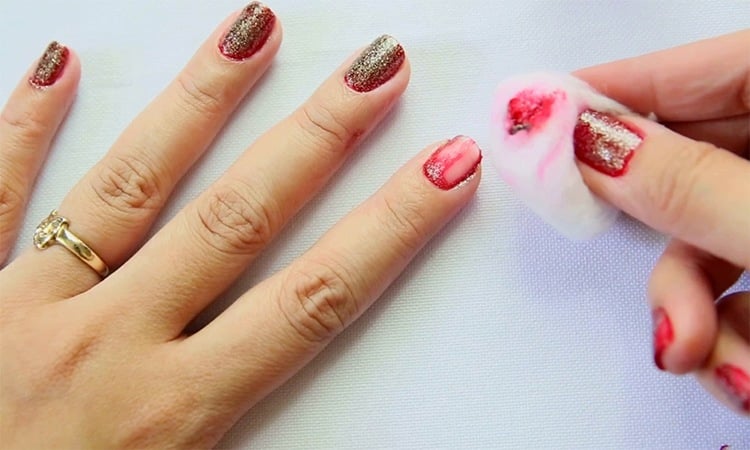
Gently scrape again until all the gel is removed. Make sure that the nails are covered by the paper towel. Pour a small amount of acetone into the ziplock bag.




No comments:
Post a Comment